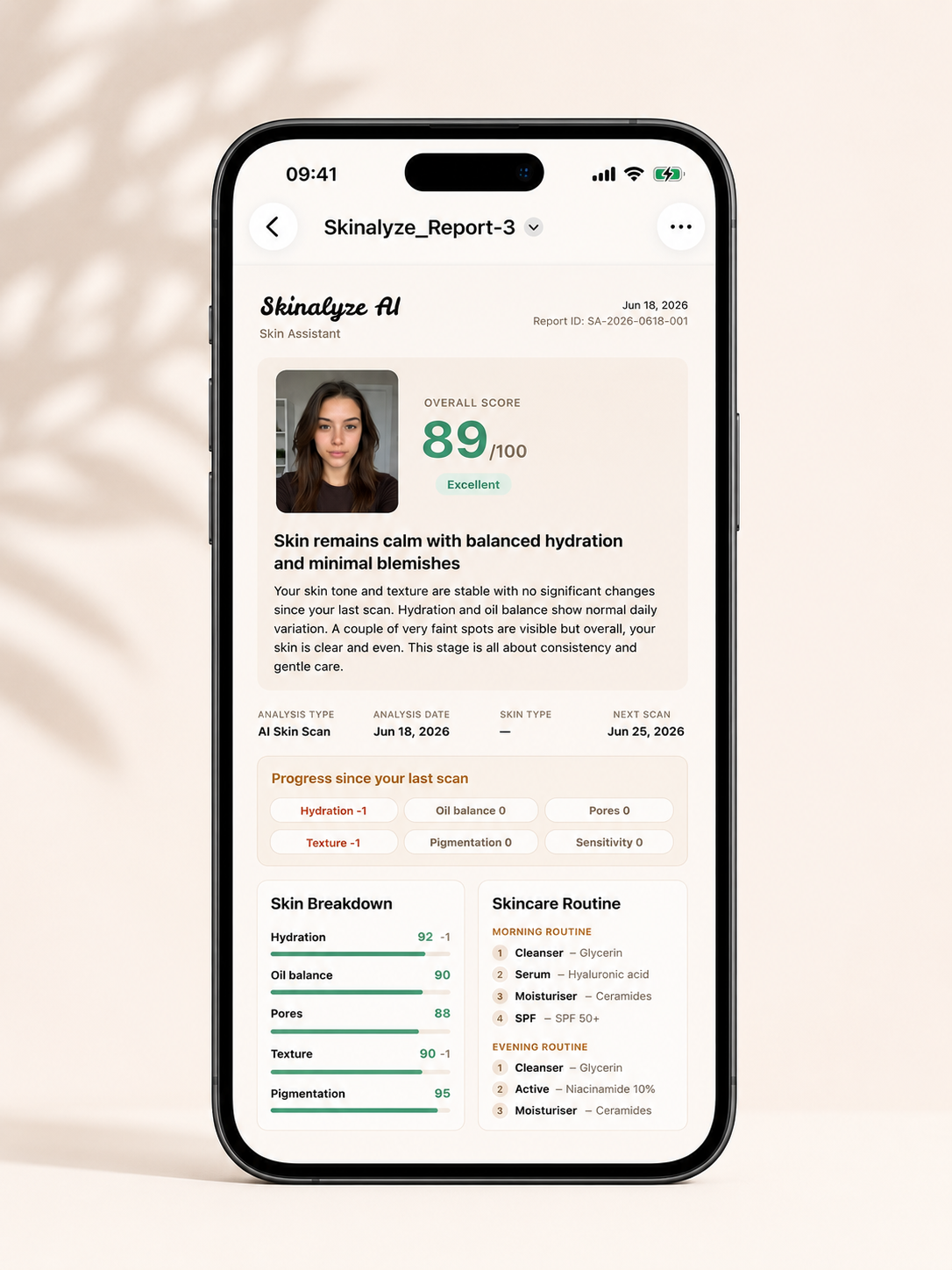
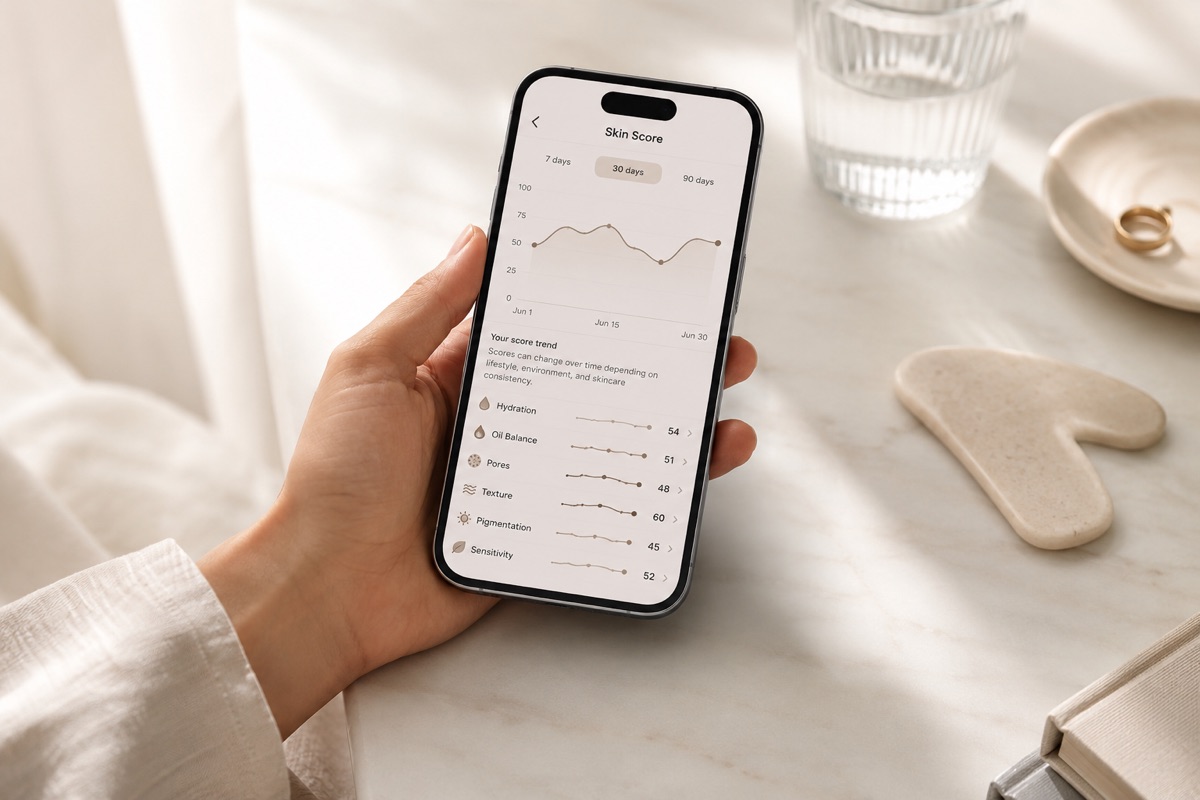
The short answer
A changing skin score isn't a bug - it's the point. Your skin genuinely looks different from one day to the next, and the score is designed to pick that up. A small rise or drop between two scans is normal and expected.
What matters is not a single number, it is the direction over several weeks. One low score tells you very little. Five scans trending down tells you something real.

Think of your skin score like a bathroom scale: ignore the daily wobble, watch the line over time.
What the score actually measures
The skin score is a summary of visible surface signs from your photo, things like hydration, oiliness, redness, visible texture, pores and pigmentation. It does not look beneath the skin and it is not a medical measurement. It is a way to put a number on what your skin is showing today, so you can compare it with last week and last month.
Because those signs are real and changeable, the score moves with them.
Everyday reasons your score goes up and down
Most score changes come from completely normal causes that have nothing to do with your routine failing:
- Hydration, how much water you've had to drink and the humidity around you change how plump and even skin looks.
- Sleep and stress, a few bad nights show up as dullness, puffiness and more visible redness.
- Your cycle, hormonal shifts across the month affect oil, breakouts and sensitivity.
- Weather and season, cold, wind, heat and air conditioning all change the skin's surface.
- Diet and salt, a salty or sugary day can mean more puffiness or temporary breakouts.
- A new product, skin can look slightly worse during an adjustment period before it improves.
The other half: photo conditions
Part of every score change is not your skin at all, it is the photo. The same face can receive different scores depending on:
- Lighting, warm bathroom light, harsh overhead light and daylight all read differently.
- Camera and angle, distance, tilt and which camera you use change what is captured.
- Lens cleanliness, makeup and filters, a smudged lens or leftover makeup distorts the reading.

For comparable scores, scan in consistent natural daylight (no direct sun), with a clean lens, no makeup or filters, the same time of day, and roughly the same distance each time.
How to read your score the right way
- Don't react to one scan. Treat a single score as one data point, not a verdict.
- Compare like with like. Scans taken in similar conditions are the only fair comparison.
- Watch the trend over weeks. Three or more scans heading the same way is the real signal.
- Connect changes to causes. A dip after a bad week of sleep or a new active usually has a simple explanation, and is often temporary.
When a drop is worth attention
A consistent downward trend that you cannot explain by sleep, weather or photos, especially alongside stinging, persistent redness, or a breakout that will not settle, is worth taking seriously. It can be a sign your barrier is struggling, often from too many actives at once. And anything painful, spreading, or genuinely worrying about a mole or spot should be checked by a dermatologist, not an app.
Why tracking beats a single scan
This is exactly why Skinalyze AI saves every scan instead of just showing today's number. One score is a snapshot. A history lets you see whether a new product is actually helping, whether your skin barrier is recovering, and whether that scary-looking dip last week was just a bad-lighting photo, which, most of the time, it was.
That's why regular scans matter: the value is in the line, not the dot.
If you want to track yours
Skinalyze AI is free to download. Scan once to get your baseline, then scan once a week, the app lines up your scans so you can see what is really changing, instead of guessing from the mirror.