The short answer
Your skin does not need a long list of trendy ingredients. It needs a small number that match two things: your skin type and your main concerns right now. Get those two right and most of the shelf becomes irrelevant.
The mistake almost everyone makes is shopping by ingredient hype, "I heard retinol is amazing", instead of asking the only question that matters: what is my skin actually struggling with, and which ingredient addresses that?

This article is general skincare guidance, not medical advice. If your skin is painful, broken, or you suspect a condition, see a dermatologist.
Step 1: Start from your concern, not the ingredient
Before you look at a single label, name the one or two things you want to change. Almost every skin concern maps to a small group of well-studied ingredients:
- Dryness and tightness, humectants (glycerin, hyaluronic acid), and emollients to seal them in.
- Oiliness and clogged pores, niacinamide, salicylic acid (BHA), lightweight gel textures - not sure which? Compare niacinamide vs salicylic acid.
- Redness and a reactive, stinging barrier, ceramides, panthenol, centella, fewer actives.
- Dark spots and uneven tone, vitamin C, niacinamide, azelaic acid, and daily sunscreen.
- Rough or bumpy texture, gentle exfoliating acids (AHA/BHA) and, in the evening, a retinoid.
- Early signs of ageing, retinoids at night, antioxidants and SPF in the morning.
Notice that sunscreen shows up under almost every concern. It is the one ingredient nearly every skin needs, because it protects the results of everything else you do.
Step 2: Filter by your skin type
The same concern can need a different texture depending on your skin type. Pigmentation on oily skin and pigmentation on dry skin both want vitamin C, but oily skin prefers a light serum while dry skin wants it paired with a richer moisturiser.

If you are not sure of your skin type, work that out first. The right ingredient in the wrong base, a heavy cream on oily skin, a gel on very dry skin, often feels like the ingredient "didn't work".
Step 3: Build the smallest routine that covers your needs
Most people need fewer products than they own. A complete routine for almost any skin can be just:
- A gentle cleanser.
- One treatment that targets your main concern (the active).
- A moisturiser suited to your skin type.
- Sunscreen every morning.
That is it. You add a second active only once the first is working and your skin tolerates it well.
The most common mistake: too much, too fast
When people finally learn which ingredients are "good", they often buy all of them and use them at once, an acid, a retinoid, a vitamin C, three hydrating serums. The result is usually a stinging, red, peeling barrier and the conclusion that "my skin is just sensitive".
It is almost never that. It is overload. Introduce one new active at a time, wait two weeks, and watch how your skin responds before adding the next.

If your skin starts stinging, flaking, or feeling tight after introducing new products, stop the actives, go back to just cleanser and moisturiser, and let the barrier recover before trying again.
How Skinalyze AI helps you decide
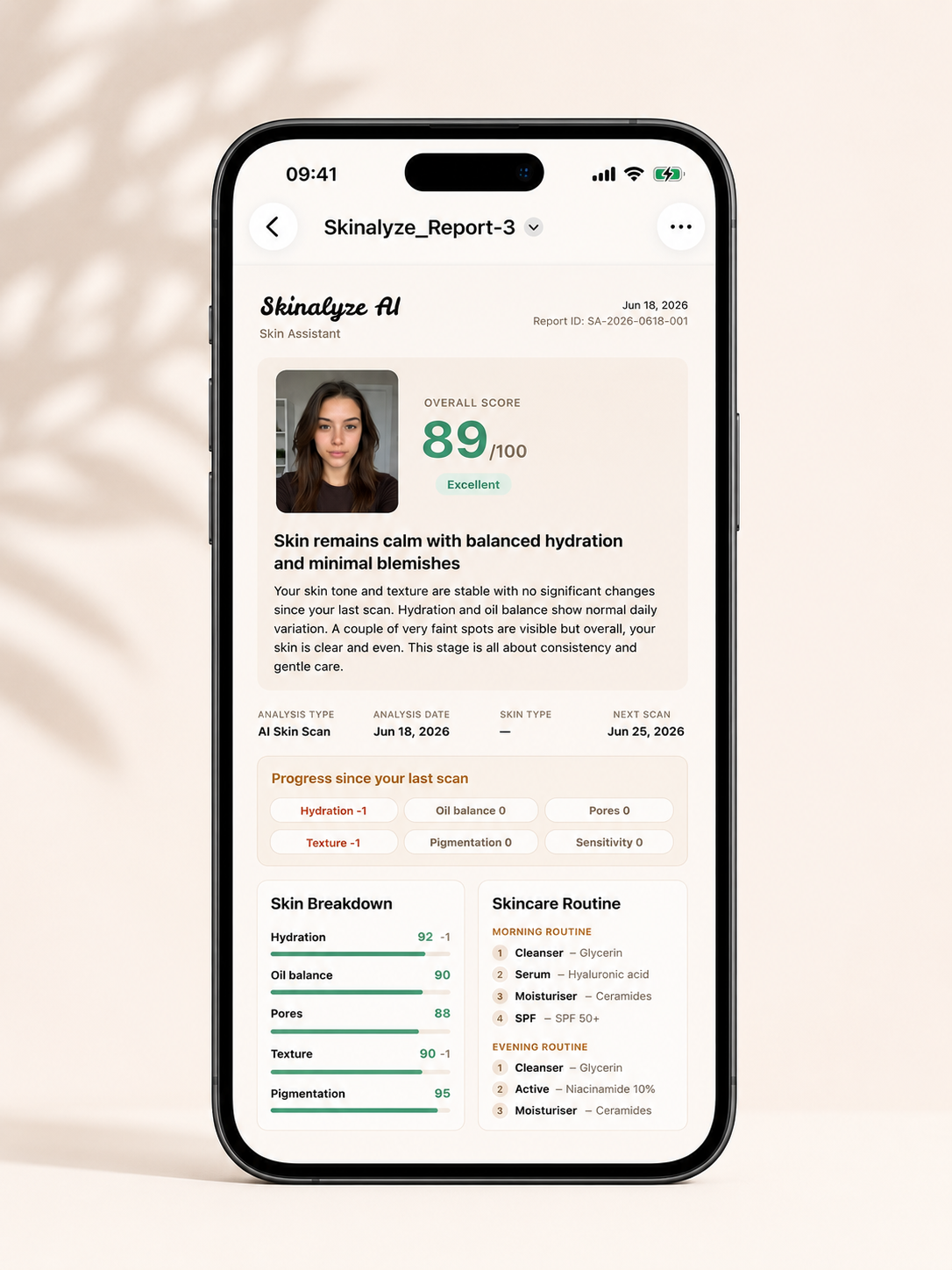
This is exactly the problem the app was built for. Instead of guessing, Skinalyze AI looks at your visible skin signs from a photo, oil, dryness, redness, texture, pigmentation, and your stated concerns, and suggests the types of ingredients that fit your skin right now.
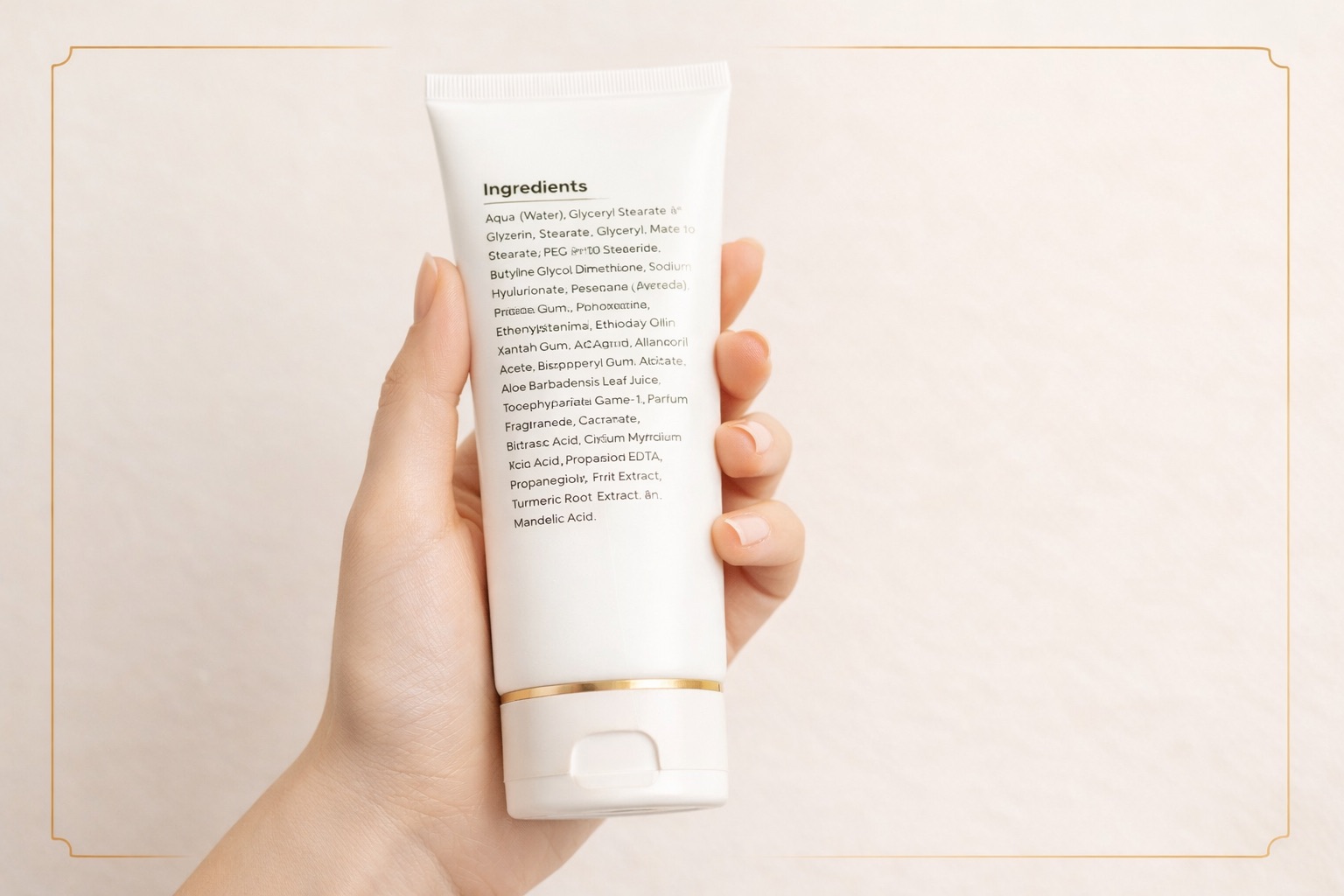
Then, when you are holding an actual product, you can scan its ingredients and the app tells you whether that specific formula matches your profile, before you spend money on it. And because every scan is saved, you can see whether an ingredient is actually helping over the following weeks, instead of relying on memory.
It is guidance, not a guarantee, individual reactions still vary, but it replaces "I think this is good for me" with something based on what your skin is actually showing.
If you want to try it
Skinalyze AI is free to download. Your first scan gives you your skin type, your main visible concerns, and the kinds of ingredients worth looking for, so the next time you shop, you already know what your skin needs.