The short answer
If you sit near a window, walk anywhere in daylight, or drive, wear it. If you are in a windowless room from dark to dark, you can skip it and lose nothing.
Most people who think they are in the second group are in the first.
What glass actually stops
Sunlight carries two kinds of ultraviolet that matter here. UVB is the one that burns you, and ordinary window glass stops almost all of it. UVA is the one linked to uneven tone, pigmentation and loss of firmness over years, and glass stops far less of it.
This is why you do not get sunburnt through a window but can still accumulate the slower kind of damage. Delivery drivers with years of sun through the side window are the standard illustration: one side of the face ages visibly faster than the other.
Car windscreens are usually laminated and block more UVA. Side windows usually are not.
The cloudy day problem
UVA does not care about cloud cover much. A grey afternoon feels harmless, which is exactly why people skip protection on the days they are outside longest. Brightness is a bad guide.
What about screens
Monitors and phones emit a negligible amount of UV. The blue light argument exists, but the evidence is thin and the dose from a screen is tiny compared with five minutes outdoors. If a product is sold to you mainly on blue light protection, that is marketing, not a reason.
A practical rule for a working week
- Desk by a window, or any daylight commute. Wear it every morning. One application is enough indoors.
- Outside at lunch, or driving. Same, and reapply if you are out for hours.
- Windowless, no daylight at all. Skip it. Spend the effort on moisturiser instead.
Indoors you do not need to reapply every two hours. That rule exists for direct sun, sweat and water, where the film physically comes off.
Why men skip it, and why it matters
The usual objections are the feel and the white cast. Both were real ten years ago and are solvable now: light fluids and gels absorb in seconds and leave nothing. The best sunscreen is the one you will actually use, so buy on texture first.
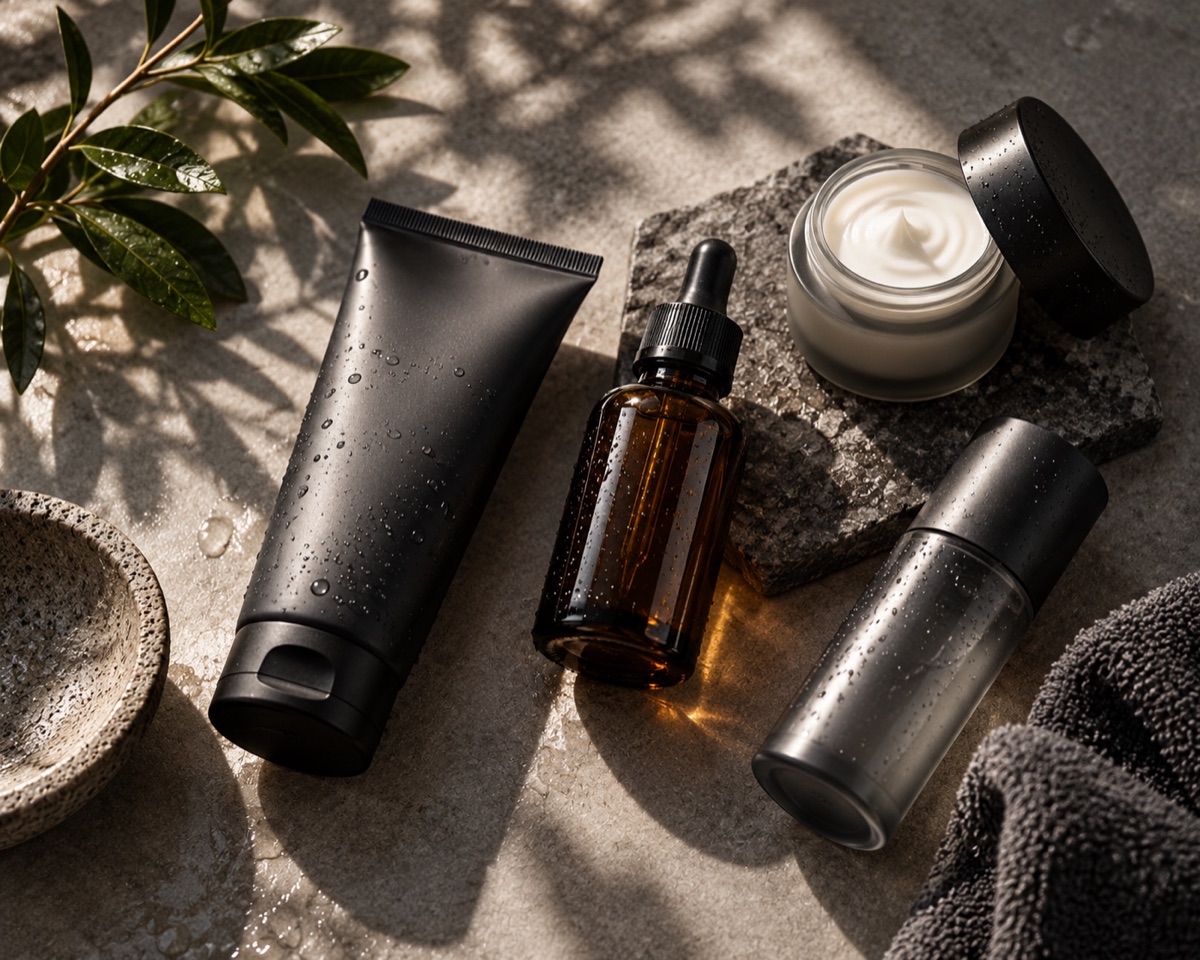
Sun exposure is the single biggest contributor to the visible changes people call ageing. It is also the cheapest one to do something about. The three product routine puts sunscreen last in the morning for a reason: anything applied on top of it dilutes the protection.
If you want to know whether it is already showing
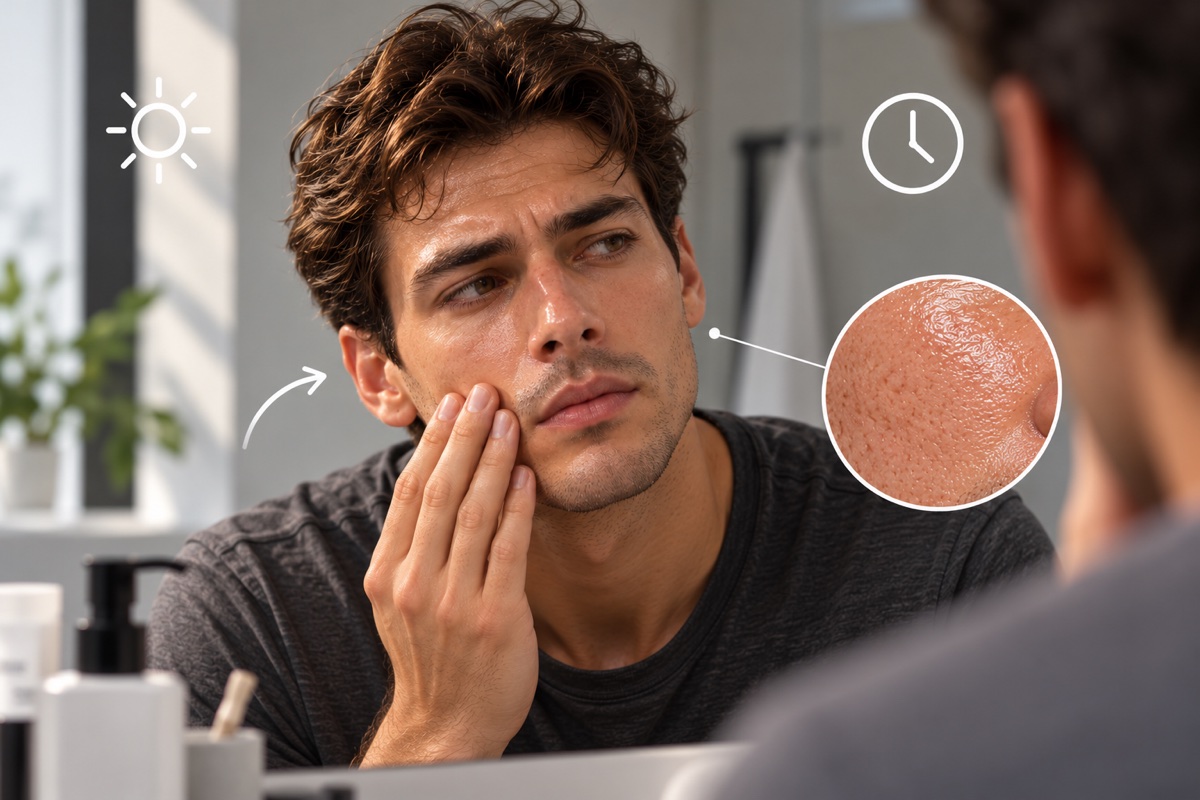
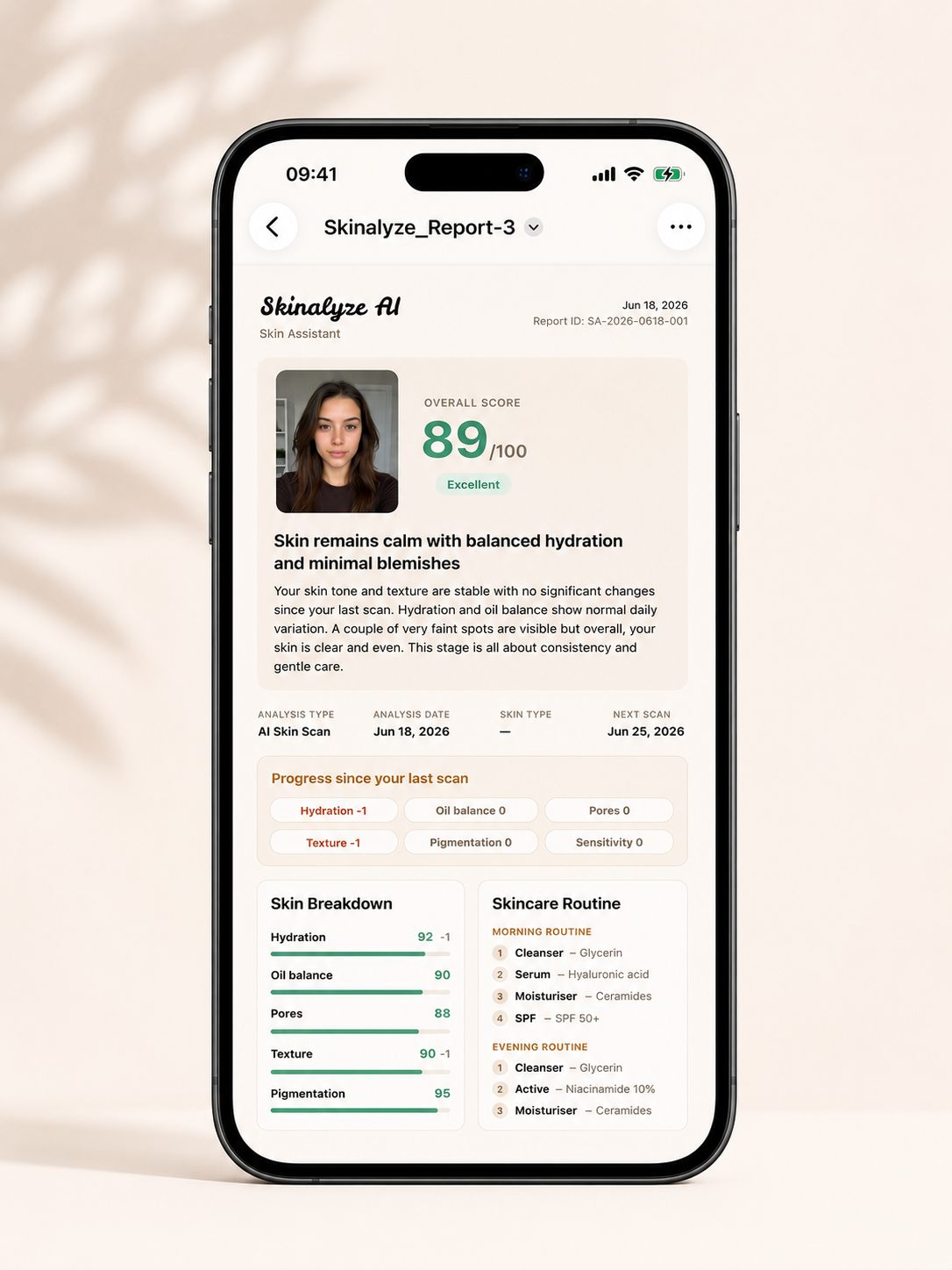
Early sun damage shows as uneven tone and faint marks long before anything you would call a wrinkle. Skinalyze AI reads a selfie and scores pigmentation separately, so you can see whether this is a problem you already have or one you are preventing.