The short answer
Apply serums from thinnest to thickest, water-based before oil-based, hydrating first, actives second.
The order matters because each serum needs to reach the skin to work. A thick or oil-based serum applied first creates a barrier the next layer cannot pass through. The active you spent money on sits on top of an oil film and does nothing.

If you are still building a full routine, start with the broader guide on how to layer skincare. This post zooms in only on the serum step.
Where serums sit in the full routine
Serums always go after cleansing and toning, and before moisturiser. Eye cream is usually a separate step right before or after your serums depending on the formula. SPF is the final morning step, on top of moisturiser.
- Cleanser
- Toner or essence (optional)
- Serums (this is what this post is about)
- Eye cream
- Moisturiser
- Face oil (optional, evening)
- SPF (morning only)
The four serum categories, in order
Most serums fall into one of four categories. Apply them in this order:
1. Hydrating serums (always first)
These pull water into the skin and prepare it for everything that follows. They have the thinnest texture and the most water content.
- Hyaluronic acid: humectant, holds 1000x its weight in water. Apply on damp skin so it has water to pull in. On dry skin it can pull moisture from your skin and make it feel tighter.
- Snail mucin: hydrates, repairs, smooths. K-beauty essential. Lightweight despite the viscous look. See our full guide on snail mucin benefits.
- Polyglutamic acid: holds 4x more water than hyaluronic acid, often paired with HA in the same formula.
- Beta-glucan: deep hydration plus barrier support, good for sensitive skin.
Hydrating serums make every subsequent layer work better because hydrated skin absorbs actives more evenly.
2. Water-based actives (second)
The brightening, balancing, and pore-refining workhorses. Water-based actives have a thin to medium texture and need to sit directly on the skin (with only the hydrating layer beneath, which is essentially transparent to them).
- Niacinamide (vitamin B3): regulates oil, fades pigmentation, strengthens the barrier. Tolerated by almost every skin type at 2 to 5 percent.
- Vitamin C (L-ascorbic acid or derivatives): antioxidant, brightens dull skin, fades dark spots. Best applied in the morning before SPF.
- Alpha arbutin: tyrosinase inhibitor, fades hyperpigmentation gently. Pairs well with niacinamide.
- Tranexamic acid: another pigmentation fader, gentler than hydroquinone, can be used long term.
- Azelaic acid: calming, fades pigmentation, helps with redness and breakouts. Slightly thicker than other water-based actives but still goes here.
If you use multiple water-based actives, apply the thinnest first. A niacinamide essence before a vitamin C serum, for example.
3. Heavier actives and oil-based serums (third)
These are the slow-burn ingredients that work overnight or need an oil base to be stable. They are thicker, often slightly tacky, and need to sit on top of the lighter layers.
- Retinol and retinoids: collagen, anti-ageing, acne, texture. Almost always in an oil or cream base. Start every other night.
- Peptides: signal molecules that support collagen and firmness. Usually in a medium to thick serum.
- Squalane: lightweight oil that mimics skin sebum. Excellent for sealing actives in or adding back the lipids that retinol can strip.
- Bakuchiol: plant-based retinol alternative, gentler, no sun sensitivity. Often in an oil base.
If you use both a peptide serum and retinol, peptides go first (water-based formulas), retinol second.
4. Repair and barrier-finishing serums (fourth or in moisturiser)
These are the lipid-replacing, soothing finishers. Often they are built into the moisturiser rather than a separate step, but standalone barrier serums exist and go last.
- Ceramides: lipid building blocks of the skin barrier. Always last serum or in the moisturiser.
- Panthenol (provitamin B5): soothes, hydrates, supports healing.
- Centella asiatica (cica): calms redness and inflammation, common in K-beauty.
- Allantoin: gentle skin softener, often in sensitive-skin formulas.
Morning vs evening serum strategy
Morning serums (protect)
Morning is for antioxidants and protection. Your skin will face UV, pollution, and stress all day.
- Hydrating serum (hyaluronic acid or snail mucin)
- Vitamin C (antioxidant, brightening, supports SPF)
- Niacinamide (optional, if not already in moisturiser)
- Then moisturiser and SPF
Skip retinol, AHA, BHA in the morning. They make skin more sun-sensitive.
Evening serums (repair)
Evening is for active treatment. The skin repairs and regenerates overnight.
- Hydrating serum
- Niacinamide or alpha arbutin (if pigmentation is a focus)
- Retinol, peptide, or AHA/BHA (the targeted treatment for tonight)
- Then moisturiser, optional face oil
Rotate the active you use in the evening rather than stacking three at once. Monday retinol, Tuesday AHA, Wednesday peptide, repeat. Skin handles one strong active per evening better than three.
The four pairs to never combine in the same step
1. Vitamin C and retinol (same routine)
Vitamin C works in an acidic pH (around 3.5). Retinol is unstable in acidic conditions and degrades. Use vitamin C in the morning, retinol in the evening. Both work, neither cancels the other.
2. AHA or BHA with retinol
Both are exfoliating and irritating. Stacked together they damage the barrier, cause redness, peeling, and breakouts. Alternate nights, or use AHA/BHA in the morning and retinol at night with at least 12 hours between them.
3. Benzoyl peroxide with retinol
Benzoyl peroxide oxidises and deactivates retinol. Use one in the morning, one in the evening, or rotate days.
4. Two acid serums together
AHA, BHA, vitamin C, and azelaic acid are all acids. Stacking two in one routine over-exfoliates and disturbs the skin barrier. Pick one acid per evening.
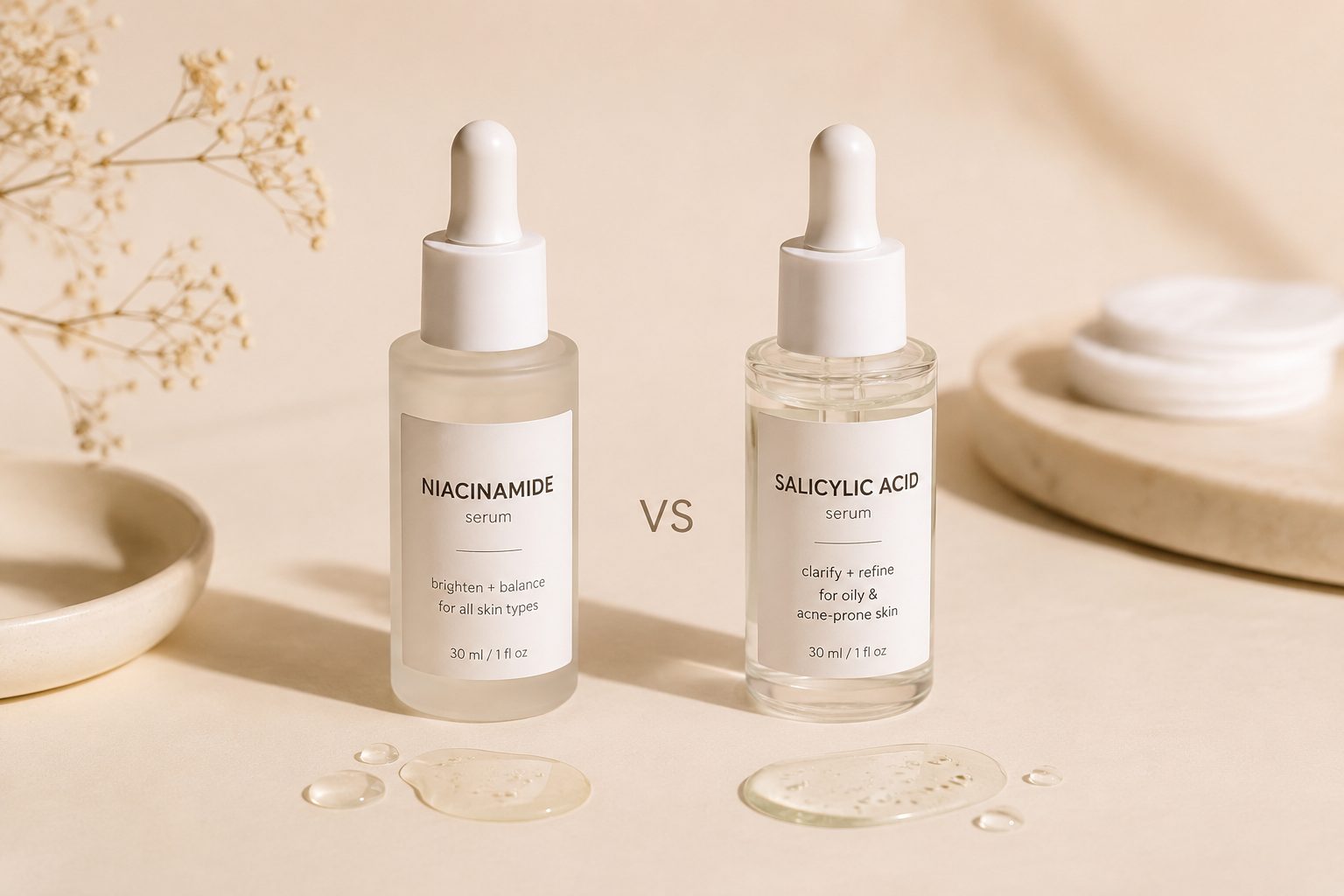
The niacinamide and vitamin C "incompatibility" you may have heard about is mostly outdated. Modern formulations are stable together. A brief flush in very sensitive skin can happen, but for most people the pairing is safe and effective. Deciding between actives instead? See niacinamide vs salicylic acid.
Common serum-layering mistakes
Mistake 1: Applying serums to wet skin (except HA)
Most serums need slightly damp, not wet, skin. Hyaluronic acid is the exception because it needs water to pull in. Niacinamide, retinol, and vitamin C should go on skin that has just absorbed the previous layer (no visible moisture).
Mistake 2: Stacking more than three serums
The skin can only absorb so much in one sitting. Beyond three serums, products start to pill (roll up under your fingertips), or simply slide off without absorbing. If you have five favourites, rotate them across morning and evening, or alternate days.
Mistake 3: No wait between actives
Layering vitamin C straight on top of an acidic exfoliant or retinol gives the skin no time to balance pH. The actives interfere with each other and irritation goes up. Wait 10 to 20 minutes between potent actives, or split them between morning and evening.
Mistake 4: Skipping moisturiser after actives
Serums need to be sealed in. Without a moisturiser layer on top, the active evaporates or oxidises faster, and the skin loses water through the open barrier. Even oily skin needs a light moisturiser after serums.
Mistake 5: Reapplying SPF over serums during the day
Once you are out of the house, do not re-layer hydrating or active serums during the day. Just reapply SPF on top of what is already there. Active serums in the middle of the day mean more sun sensitivity, not better skin.
A worked example: combination skin with mild hyperpigmentation
Here is what a real two-serum routine looks like for someone with combination skin, oily T-zone, and a few post-acne dark marks.
Morning
- Gentle gel cleanser
- Hyaluronic acid serum on damp skin
- Vitamin C serum (10 percent ascorbic acid or a derivative)
- Lightweight moisturiser
- Mineral SPF 50
Evening
- Oil cleanser, then gel cleanser (double cleanse)
- Hyaluronic acid serum on damp skin
- Niacinamide serum (5 percent)
- Retinol 0.3 percent (three nights a week to start)
- Ceramide-rich moisturiser
Two serums in the morning, two to three in the evening with retinol added when the skin is ready. Total active routine: under 10 minutes per session.
If you only remember one thing
Thinnest to thickest. Water before oil. Hydrate first, active second. Get that right and the order of your specific serums takes care of itself.