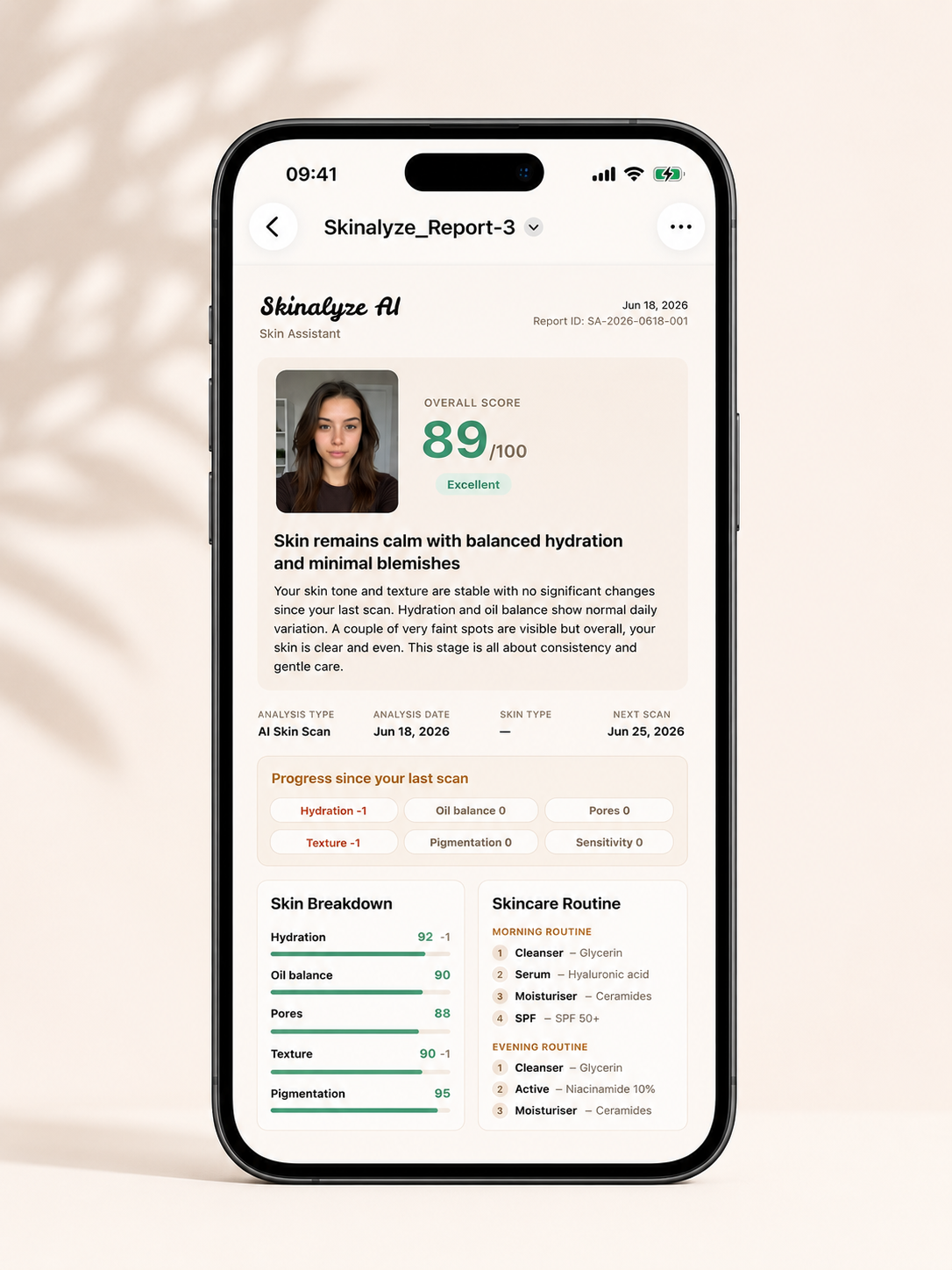
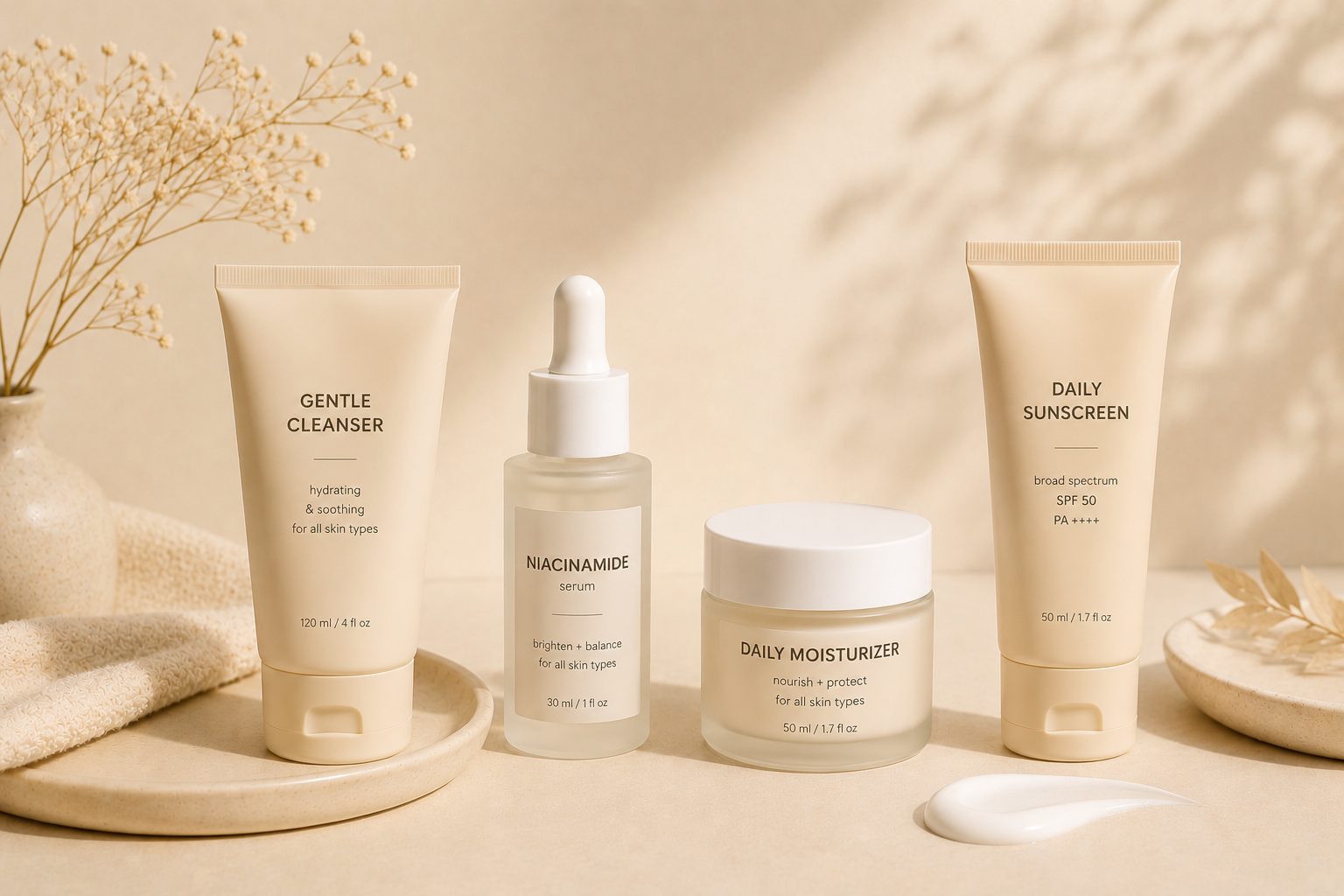
The single rule that decides everything
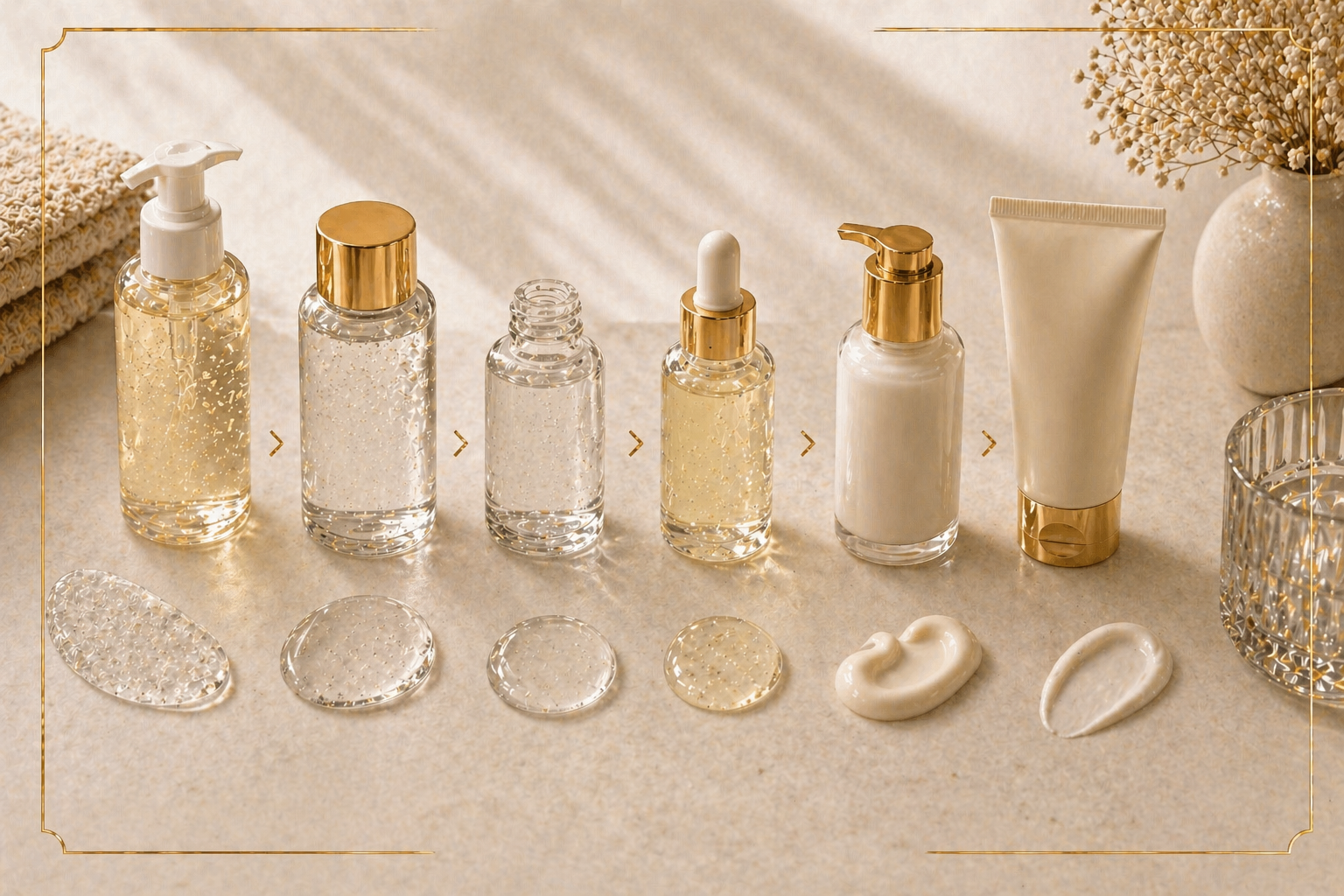
Apply products from thinnest to thickest texture. Water-based first, oil-based last, SPF always at the very end in the morning.
The reason: thicker products create a barrier that prevents thinner products applied on top from absorbing. If you put moisturiser before serum, the active ingredients in your serum simply can't reach the skin.
The full layering order
- Cleanser (or double cleanse in the evening)
- Toner or essence (optional)
- Treatment serum - actives (vitamin C, niacinamide, retinol, AHA/BHA)
- Eye cream (if used)
- Moisturiser
- Face oil (if used)
- Sunscreen (morning only - non-negotiable)
You don't need every step. A minimal routine of cleanser → serum → moisturiser → SPF outperforms a 10-step routine if those four are right for your skin.

Wait 30-60 seconds between layers when using actives. This lets each product absorb properly and prevents the next layer from re-emulsifying it.
Morning routine - sequence
Step 1: Gentle cleanser
Or just water if your skin is dry or sensitive. The goal is to remove overnight build-up without stripping protective oils.
Step 2: Antioxidant serum
Vitamin C is the gold standard for morning. It boosts SPF protection, neutralises free radicals from UV and pollution, and gradually evens skin tone.
Step 3: Moisturiser
A lighter formula in the morning - gel or lotion - so it sits well under SPF and makeup.
Step 4: SPF (the most important step)
SPF 30 minimum, SPF 50 preferred. Everything else in your routine is irrelevant if you skip this. Reapply every two hours in direct sun.
Evening routine - sequence
Step 1: Double cleanse
An oil-based cleanser or balm first to dissolve SPF and makeup, then a water-based cleanser. A clean base lets the actives that follow actually work.
Step 2: Treatment
Your active goes here - retinol, AHA, BHA, or peptide serums. The skin is more receptive at night, and there's no UV interference. Use only one strong active per evening to avoid irritation.
Step 3: Hydrating layers (optional)
Hyaluronic acid serum, niacinamide, or a soothing essence. Apply on slightly damp skin to maximise hydration.
Step 4: Richer moisturiser or night cream
Heavier than your day moisturiser. This locks in the actives and prevents transepidermal water loss overnight. If your skin barrier is feeling stressed, swap in a barrier-repair cream with ceramides.
What pairs well together (and what doesn't)
- Niacinamide + virtually anything - the team player of skincare
- Vitamin C + SPF (morning) - amplifies sun protection
- Hyaluronic acid + everything - pure hydration, layer first when damp
- Retinol + ceramide moisturiser - reduces irritation
- AHA/BHA + niacinamide - despite myth, fully compatible
Avoid combining the same night
- Retinol + AHA/BHA - too much exfoliation, can damage barrier
- Vitamin C + retinol - separate them: vitamin C morning, retinol evening
- Multiple high-strength actives at once - more isn't better, it's a path to irritation
Frequently asked questions
How long should I wait between layers?
30-60 seconds for most products. Longer (5-10 minutes) only when using a low-pH active like AHA, BHA, or vitamin C - this lets the pH stabilise before layering anything else.
Do I really need toner?
No - it's optional. Modern toners aren't the harsh astringents of the past. They can add hydration or a low dose of actives, but a routine without toner is perfectly complete.
Is it better to layer many serums or use one strong one?
One well-chosen serum usually beats stacking multiple. Each serum needs to penetrate, and each successive layer absorbs less than the one before. If you want both niacinamide and another active, alternate between morning and evening rather than layering both at once.
Can I use the same products in the morning and evening?
You can, but you shouldn't for everything. Skin needs different things at different times: protection in the morning (SPF, antioxidants), repair at night (retinoids, peptides). Sharing your moisturiser and cleanser between AM and PM is fine.
Where does SPF reapplication fit in the layering order?
For reapplication during the day, mineral SPF sticks or powders are easiest to layer over makeup. Otherwise, gentle press over the existing makeup with a fresh layer of SPF cream works - skip the rubbing.