Two different problems that look the same
Flakes in a beard are nearly always one of two things, and the treatments pull in opposite directions.
Dry skin is simple: the skin underneath is short of water and oil, the beard makes it harder to moisturise, and flakes come off as fine, pale dust.
Seborrheic dermatitis is a reaction to a yeast that lives on everyone and feeds on skin oil. It produces greasier, yellowish flakes that stick, usually with redness underneath, and it appears in the oiliest places: the scalp, the eyebrows, the sides of the nose and under a beard.
How to tell
- Look at the flakes. Fine and dry suggests dry skin. Larger, slightly greasy and yellowish suggests seborrheic dermatitis.
- Look underneath. Visible redness along the skin, not just flakes on the hair, points to the second.
- Check the map. If you also flake at the eyebrows, in the folds beside the nose or on the scalp, that pattern is the giveaway.
- Remember what oil did. Beard oil helps dry skin. If it made things worse, you are likely feeding the yeast.
If it is dry skin
Wash the beard with something gentle rather than hair shampoo, which is often harsher than facial skin wants. While the skin is still damp, work a light moisturiser down to the skin with your fingertips, not just over the hair. Beard oil on top is fine and helps the hair feel softer.
Hot showers and hard water both make this worse, and both are easy to adjust.
If it is seborrheic dermatitis
Moisturiser alone will not settle it. The standard approach is an antifungal shampoo, the kind sold for dandruff with ketoconazole or zinc pyrithione, used on the beard two or three times a week. Lather, leave it for a few minutes, rinse. Then moisturise, because those shampoos are drying.
It is a condition that is managed rather than cured. It comes back during stress, in winter and when you stop. That is normal and not a sign the treatment failed.
What makes both worse
Scratching, scrubbing, very hot water, and stacking strong actives on already irritated skin. If the skin under the beard is red and sore, repair comes before anything else. A damaged barrier has its own signs and its own fix.
When to see someone
Thick scaling, weeping, spreading patches, or flaking that does not budge after a few weeks of antifungal shampoo deserve a doctor. Skinalyze AI is educational and does not diagnose.
If the flakes and the redness confuse you
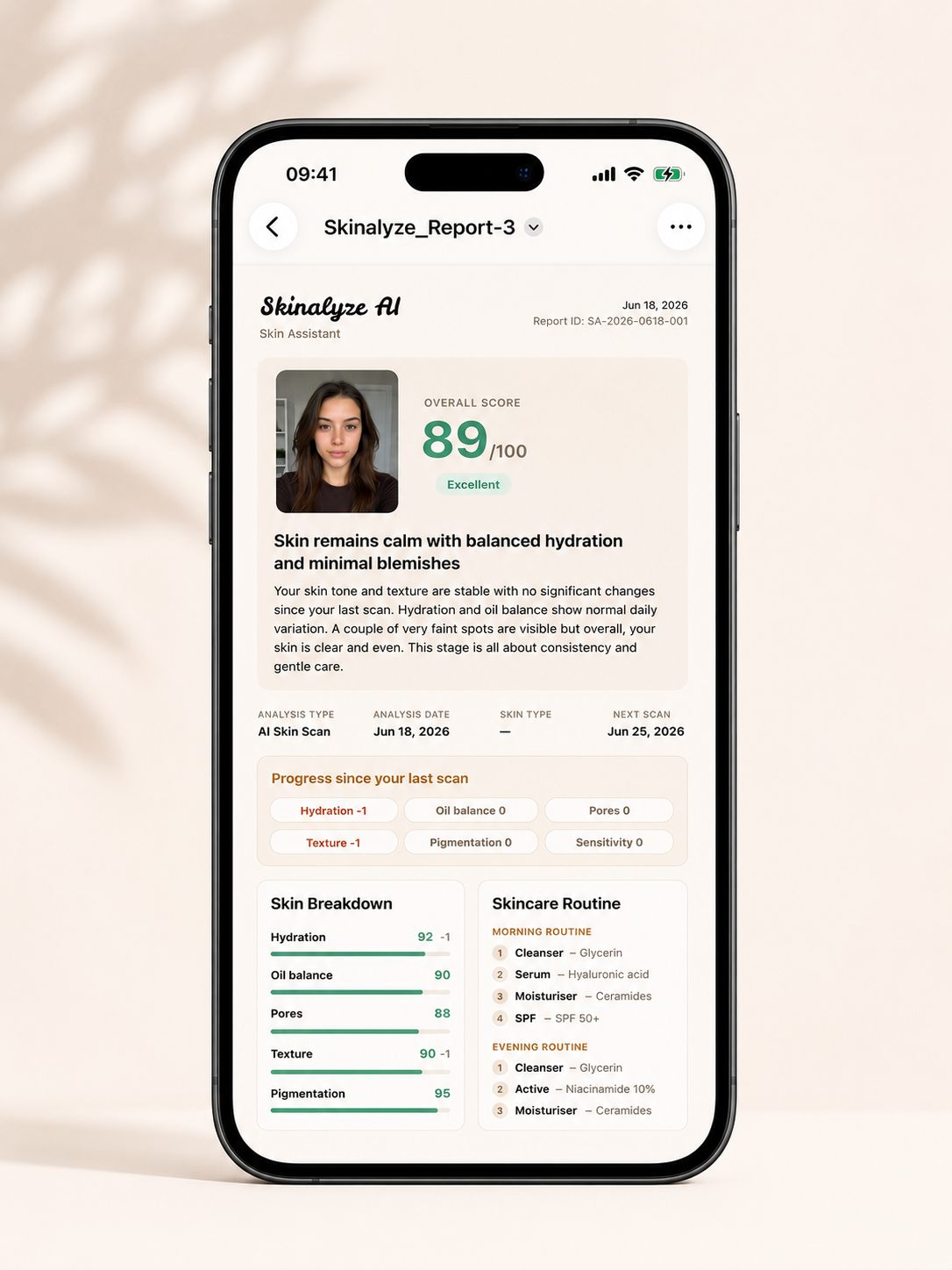
Redness under a beard is hard to judge through hair, and it is the detail that separates the two causes. Skinalyze AI scores visible redness and dryness separately from a selfie, which gives you a starting point better than guessing in a bathroom mirror.