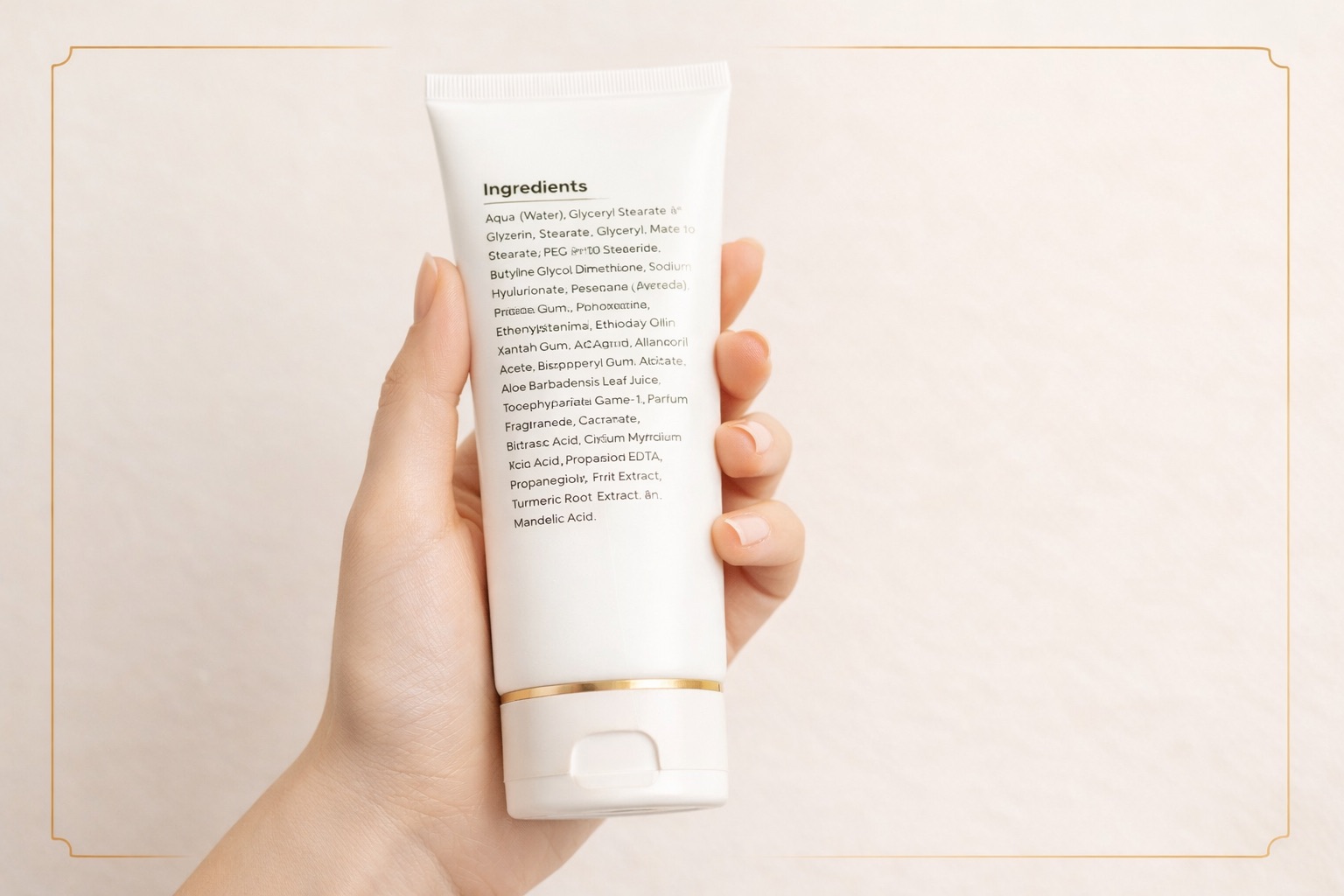
Why ingredients order matters
By law, cosmetic ingredients must be listed in descending order of concentration. The first ingredient on the list is the most abundant — usually water (Aqua) or aloe vera. The last ingredients are present at less than 1% concentration and can appear in any order after that threshold.
This means: the first five to seven ingredients make up the bulk of the product. If you love or hate a product, those are the ones responsible.
A good rule of thumb: if an ingredient appears after the preservatives (like phenoxyethanol or sodium benzoate), it's present in very small amounts — often less than 0.5%.
Common ingredients decoded
Humectants — attract moisture
These ingredients draw water into the skin from the environment and deeper skin layers. Look for: Glycerin, Hyaluronic Acid (Sodium Hyaluronate), Panthenol (B5), Urea, Propylene Glycol.
Emollients — soften and smooth
Emollients fill gaps between skin cells, making skin feel soft and look smooth. Look for: Squalane, Dimethicone, Cetyl Alcohol, Jojoba Oil, Shea Butter.
Occlusives — lock moisture in
These create a barrier on the skin surface to prevent water loss — essential for dry skin. Look for: Petrolatum, Beeswax, Dimethicone, Lanolin, Mineral Oil.
Actives — targeted treatment
Active ingredients address specific concerns like acne, ageing, or pigmentation. Common ones include: Retinol, Niacinamide, Vitamin C (L-Ascorbic Acid), AHA/BHA acids (Glycolic, Lactic, Salicylic), Azelaic Acid, Peptides.
Ingredients to approach with caution
Not all ingredients are problematic for everyone, but these are worth knowing about if you have sensitive or reactive skin:
- Fragrance (Parfum) — the most common cause of contact dermatitis. May hide dozens of undisclosed chemicals under one label.
- Essential oils — naturally derived but can be highly sensitising (lavender, citrus, eucalyptus).
- Alcohol Denat. — drying and irritating at high concentrations. Not the same as fatty alcohols (cetyl, stearyl).
- Sodium Lauryl Sulfate (SLS) — strong surfactant that strips the skin barrier in some people.
The "free from" trap
"Paraben-free", "fragrance-free", "sulphate-free" labels are marketing tools. A product can be free from parabens but full of more irritating preservatives. Always read the full list rather than relying on front-of-pack claims.
A practical reading method
Here's a simple three-step approach:
- 1. Scan the top 5 — what is this product mostly made of?
- 2. Find your active — is the ingredient you're buying it for actually there in meaningful concentration?
- 3. Check for known irritants — fragrance, essential oils, or anything you've reacted to before.
Not sure if a product suits your skin type? Skinalyze AI can scan any ingredient list with your camera and give you a personalised verdict in seconds.